Financing the Next Phase of the US Renewable Energy Buildout
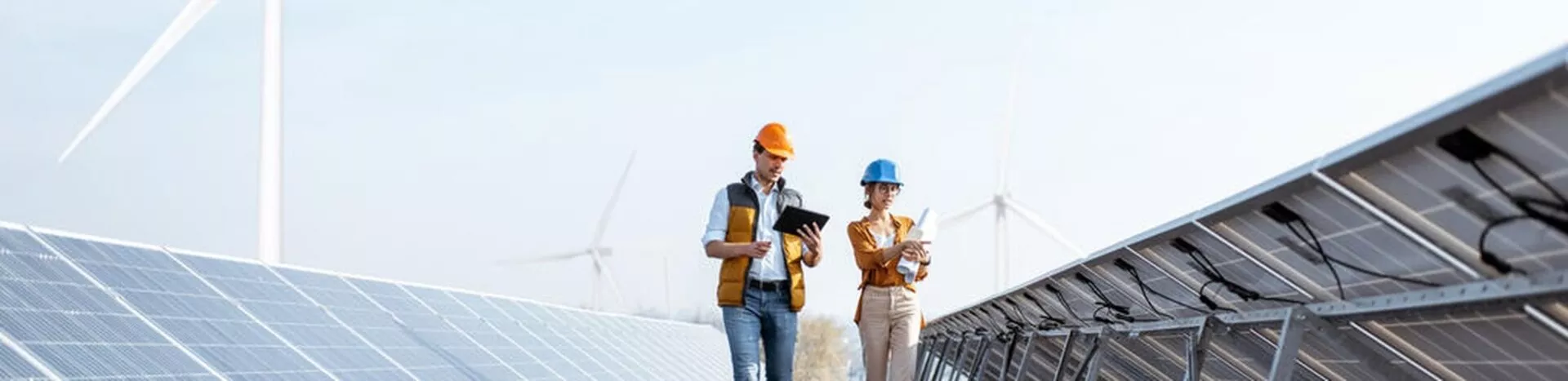
A conversation with Societe Generale's Eric Kim, Head of Power, Energy, Mining & Industrials for the Americas
The US renewable market has moved from a policy-led growth story to a critical infrastructure story. Demand for power is accelerating after decades of relative stagnation, driven by artificial intelligence, data centers, electrification, industrial reshoring and broader economic growth.
Many projections forecast peak demand to exceed 225GW by 2035, equating to a 24% increase compared to 2025. Data center load, in particular, is a key driver to the load growth. According to S&P, US data center demand is expected to reach well in excess of 100GW by 2030.
The energy intensity of data centers is creating both a challenge and an opportunity for power developers and banks that are financing the next wave of power development. In one recent example, Societe Generale acted as a Lead Underwriter and Bookrunner in support of Intersect Power’s development of a 1.1GW solar plant with co-located Battery and Energy Storage System (BESS), providing critical high-capacity power into the CAISO grid in California and Nevada to support AI expansion in the market.
We spoke with Eric Kim, who directs Societe Generale Americas’ power, energy and mining activities, to discuss the Bank’s approach in supporting the region’s energy needs.
The US renewable energy sector has grown rapidly, but the market feels more complicated today. What are the biggest challenges facing the industry?
The central challenge is that demand for renewable power is accelerating just as the industry is confronting a more difficult development environment. The opportunity is enormous given demand is being reshaped by AI, data centers, electrification and industrial growth. Societe Generale has also pointed that data centers are creating significant new demand for clean power, particularly from large technology companies with long-term sustainability commitments.
The ability to meet that demand depends on execution. Developers must secure land, permits, equipment, tax-credit eligibility, offtake agreements and financing, and, most importantly, interconnection rights, often in a compressed timetable. The most important constraints are no longer simply the cost of solar panels or wind turbines; they are grid access, transmission availability and certainty around project timelines.
From Societe Generale’s perspective, this means the sector is maturing. The winners will be those with strong development discipline, well-capitalized developers with sophisticated financing strategies, resilient supply chains and the ability to manage regulatory and market complexity. Renewable energy remains highly attractive, but projects must now be structured with a much sharper focus on deliverability, risk allocation and long-term value creation.
The buildout of AI infrastructure in the US is staggering. How significant is the trend of using renewable energy to power data centers?
It is one of the most important demand-side developments in the market. The growth of AI and cloud computing is creating a step-change in electricity demand, and technology companies are looking for scalable, reliable and low-carbon power solutions. Societe Generale’s financing of Longroad Energy’s 1000 Mile solar project in Texas is a good example of how this trend is translating into real transactions: the project is designed to help meet the growing power demand associated with Meta’s data center operations.
This is significant because it creates a strong commercial rationale for new renewable generation. Corporate buyers—particularly hyperscalers—are increasingly sophisticated counterparties. They understand that their growth depends not only on digital infrastructure, but also on access to large volumes of electricity.
However, this demand also intensifies pressure on the grid. Data centers require large quantities of power, often on accelerated schedules, while transmission and interconnection processes move much more slowly. That mismatch is becoming one of the defining issues in the US power market. For renewable energy companies, the opportunity is clear, but so is the need to pair generation with storage, grid solutions and thoughtful market selection.
How are policy uncertainty, tax credits and supply-chain issues affecting renewable energy financing?
Policy remains a major factor in US renewable energy economics. Tax credits have historically been central to project finance structures, and recent changes affecting eligibility, domestic content, foreign-entity rules and timelines have increased the need for careful structuring. Developers are responding by moving quickly where possible, securing safe-harbor positions, diversifying suppliers and increasing attention to domestic procurement.
That said, the underlying investment case is not solely dependent on policy. Renewable energy remains competitive given the following factors: (i) technology costs have declined over time and renewable assets maintain a competitive Levelized Cost of Energy (LCOE); and (ii) rising power prices (both contracted and spot sales) driven by a combination of market demand dynamics and an inflationary macro-environment.
For banks and investors, the practical implication is that financing needs to be more flexible and more sophisticated. Transactions must account for tax-credit monetization, equipment sourcing, tariff exposure, construction timelines, merchant risk, offtake quality and sponsor strength.
Beyond solar and wind, where do you see the next areas of opportunity in the US energy transition?
The next phase of the market will be broader than renewable generation alone. Solar and wind remain essential, but the system also needs storage, transmission, interconnectors, flexible generation, clean fuels and other infrastructure that can support reliability.
Battery storage is particularly important because it helps address intermittency, provides grid flexibility and can support the integration of more renewable capacity.
We also see growing interest in solutions that serve large-load customers directly, including behind-the-meter or co-located generation, hybrid projects and customer-sited energy resources. As data-center demand grows faster than grid infrastructure can expand, customers may increasingly look for tailored power solutions that combine speed, reliability and lower-carbon attributes.
How can Societe Generale support renewable energy companies as a strategic advisor and banking partner?
We are well positioned because the renewable energy transition requires exactly the capabilities that define our platform: (i) deep sector knowledge; (ii) global project finance expertise; (iii) extensive advisory experience across asset classes, and (iv) capital markets access and market intel.
For clients, the challenge is increasingly multidimensional. A renewable energy company may need project financing for a solar portfolio, advisory support for an acquisition, hedging solutions for power-market exposure, tax-equity or credit structuring, balance-sheet financing, or strategic guidance on entering battery storage, hydrogen or transmission-related infrastructure. Societe Generale’s strength is the ability to bring those capabilities together in a coordinated way.
Ultimately, our role is to help clients manage complexity. The renewable energy sector has no shortage of demand or capital interest, but successful execution requires disciplined structuring, thoughtful risk allocation and a clear understanding of how policy, technology, power markets and financing conditions interact.

A EUR 175 million ICIEC‑covered financing supports the Bandırma–Bursa–Yenişehir–Osmaneli High‑Speed Railway project in...

A video interview with Lénaïg Trénaux, Global Co-Head of Energy, Mining and Industries and Head of Sustainable and...
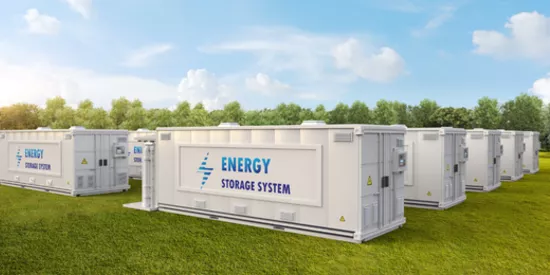
Societe Generale acted as Financial Advisor, Mandated Lead Arranger and Hedge Provider in the financing of the Kyon...
Article from Horizons, Issue 11, Autumn 2026, Loan Market Association. By Karin Bony-Merad Head of Sustainable Finance,...