Blockchain

What is Blockchain?
Blockchain is a secure, transparent information storage and transmission technology that operates without a central control unit. It is based on a distributed, immutable register, structured in the form of chained blocks and validated by a network of computers called nodes.
Blockchain is based on several principles:
- Decentralization: Unlike traditional databases, blockchain is managed by a distributed network of interacting participants, with no central authority.
- Transparency: In the case of public blockchains, all registered transactions are visible and verifiable by all network participants.
- Immutability: Once a block has been validated and added to the chain, it becomes virtually impossible to modify or delete it.
- Security: Each transaction is validated by cryptographic mechanisms, ensuring the integrity and authenticity of these transactions.
- Authorization: Transaction validation and compliance are based on consensus protocols ensuring agreement between network nodes (Proof of Work, Proof of Stake...)
What are the types of Blockchain?
There are different types of blockchain, each with its own operating procedures:
- The public blockchain, for example, is accessible to all, such as Bitcoin and Ethereum.
- Private blockchain, on the other hand, is controlled by an organization or consortium, with restricted access granted by the controlling entity(ies).
- The hybrid blockchain combines the functions of private and public blockchains, so that only limited data is controlled.
In this way, Blockchain guarantees efficient, transparent and secure transactions, facilitating financial operations.
Our latest news and insights
Societe Generale named Volatility Derivatives House of the Year for the third consecutive year
GlobalCapital has once again recognized Societe Generale as Volatility Derivatives House of the Year (Europe & Asia),...
GlobalCapital has once again recognized Societe Generale as Volatility Derivatives House of the Year (Europe & Asia),...
Awards & Rankings
GlobalCapital has once again recognized Societe Generale as Volatility Derivatives House of the Year (Europe & Asia), underscoring our market-leading capabilities in Equity Derivatives.
Societe Generale named Volatility Derivatives House of the Year for the third consecutive year
Powering the next generation of transaction banking
Societe Generale helps corporates navigate a rapidly changing payments ecosystem by bringing together traditional...
Societe Generale helps corporates navigate a rapidly changing payments ecosystem by bringing together traditional...
Expert views
Societe Generale helps corporates navigate a rapidly changing payments ecosystem by bringing together traditional finance and digital assets
Powering the next generation of transaction banking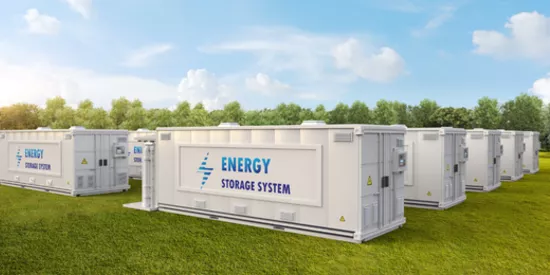
Financing a key infrastructure for Germany’s energy transition
Societe Generale acted as Financial Advisor, Mandated Lead Arranger and Hedge Provider in the financing of the Kyon...
Societe Generale acted as Financial Advisor, Mandated Lead Arranger and Hedge Provider in the financing of the Kyon...
Clients' successes
Societe Generale acted as Financial Advisor, Mandated Lead Arranger and Hedge Provider in the financing of the Kyon portfolio, comprising 11 battery energy storage system (BESS) facilities being developed by TotalEnergies' subsidiary Kyon Energy in Germany. The project represents one of the country's most prominent BESS platforms under development.
Financing a key infrastructure for Germany’s energy transition
More results
google link