A realistic outlook on nuclear energy expansion
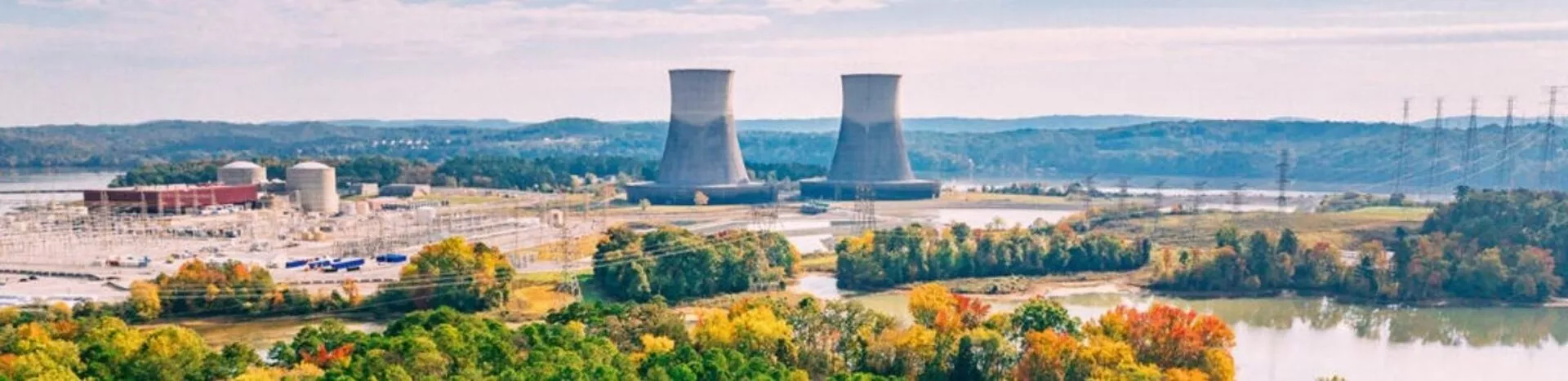
Growing international momentum and ambitious national strategies are repositioning nuclear energy as a key component of decarbonisation and long-term energy security. Yet despite renewed political enthusiasm, the pace of development continues to be shaped by structural realities that inherently resist acceleration. Viewpoint by Allan Baker, Global Head of Advisory and Energy Transition at Societe Generale.
Electricity demand is surging worldwide, driven by data centers, digital services, electrified industries and emerging clean tech value chains. In regions where nuclear energy already provides a substantial share of low-carbon power, its role as an anchor of energy security is increasingly recognized - particularly by industries requiring continuous, reliable and climate-aligned electricity.
Across Europe, and increasingly worldwide, governments have reaffirmed nuclear power’s strategic importance in stabilizing energy systems. This renewed alignment has strengthened expectations for accelerated deployment. Yet nuclear projects continue to progress according to a procedural rhythm shaped by stringent regulation, long development phases, complex industrial coordination and significant capital intensity - factors that inherently limit the speed at which the sector can expand.
Structural constraints on deployment speed
The UK’s Wylfa site offers a clear illustration of the gap between ambition and delivery. Selected as the preferred location for the country’s first small modular reactors (SMRs), it benefits from strong political support. Yet the project remains in its early stages: multi-year environmental studies, regulatory assessments and design reviews are still underway, absorbing significant time and resources well before construction can begin. This mirrors international experience, where even favorable political conditions cannot compress the safety-driven processes inherent to the nuclear lifecycle.
These extended timelines stand in contrast to the rapid deployment potential of other energy technologies. While nuclear offers recognized low-carbon baseload capacity, alternative power sources continue to attract investors due to shorter permitting cycles and faster integration into the grid.
Financing challenges and the return of private capital
Nuclear remains one of the most capital-intensive forms of energy infrastructure. High upfront costs, long development horizons and the risk of delays, with tangible recent examples, have historically weighed on investor confidence.
Nonetheless, private capital is gradually returning. Increasing electricity demand and renewed appreciation for stable, low-carbon baseload power have strengthened nuclear’s appeal to long-term institutional investors accustomed to regulated sectors and predictable revenue streams. Engagement from sovereign wealth funds, asset managers and multilateral lenders is growing - provided that risk-sharing mechanisms and regulatory certainty are firmly established.
In this environment, financing approaches that blend public and private participation (such as government guarantees, regulated asset-based models and long-term state-backed contracts) are emerging as credible ways to reduce financing costs and enhance bankability.
Financing next-generation technologies
SMRs are attracting strong policy and industry interest. Their modular design and standardized manufacturing raise hopes for lower costs, faster delivery and greater flexibility than traditional large reactors, a dynamic reflected in the UK’s decision to develop its first SMRs at Wylfa.
Beyond their technological promise, SMRs also reshape a critical dimension of nuclear development: the supply chain. Nuclear relies on one of the most complex and tightly regulated industrial ecosystems, spanning materials, fuel‑cycle services, specialized components and long‑term waste management - all subject to capacity and geopolitical constraints.
By enabling modular, factory‑based production, SMRs are expected to help ease some of these pressures by widening the supplier base and reducing dependence on single‑source components or fuel pathways. Building this new industrial capacity will require early investment, but it can ultimately strengthen supply‑chain resilience and support more predictable deployment.
Despite this potential, investor caution remains. Commercial viability has yet to be proven at scale, SMR technologies are at various stages of maturity, and significant upfront investment in standardization, manufacturing capability and adapted regulatory frameworks is still needed.
The role of financial institutions
Financial institutions with experience in large scale infrastructure play a decisive role in making nuclear projects bankable. By combining public sector support with long term investor participation, and by structuring financing aligned with regulatory certainty and climate objectives, banks can significantly strengthen investor confidence.
The financing of Sizewell C illustrates this impact. Its cost-optimised structure brings together government backing, multiple institutional investors and export credit agencies, and is widely seen as a template for future nuclear projects. The transaction (with Societe Generale acting as Mandated Lead Arranger for GBP5 billion of export credit covered debt) unites the UK Government, EDF, Centrica, La Caisse and Amber Infrastructure within a framework designed to reduce risk and attract private capital.
This model demonstrates growing institutional confidence in nuclear as a long term, climate aligned asset supported by stable revenues and clear regulation. Societe Generale’s role highlights how specialized financial institutions can unlock complex, multistakeholder projects, while Sizewell C itself strengthens UK supply chains and supports the transition toward advanced reactor technologies.
A measured but meaningful nuclear renaissance
A global nuclear renaissance is undeniably underway, driven by energy-security needs and shifting investor sentiment. Yet the sector’s trajectory is defined as much by its structural constraints as by its political momentum.
Ambition alone cannot compress regulatory cycles, rebuild supply chains or accelerate industrial coordination. But with rising electricity demand and renewed recognition of nuclear’s strategic value, governments, industry and financiers increasingly converge around the need for long-term policy clarity, stable regulatory environments and financing models that effectively manage risk.
The future pace of nuclear deployment will depend on sustained policy consistency, expanded public-private collaboration and innovation not only in technology but also in financing. In this evolving landscape, institutions with deep expertise in complex infrastructure financing will play a decisive role in shaping the next generation of nuclear projects.

By Wei Yao, Global Chief Economist and Head of Research for Asia Pacific, Societe Generale

A video interview with Lénaïg Trénaux, Global Co-Head of Energy, Mining and Industries and Head of Sustainable and...

Societe Generale helps corporates navigate a rapidly changing payments ecosystem by bringing together traditional...
Societe Generale acted as Financial Advisor, Mandated Lead Arranger and Hedge Provider in the financing of the Kyon...

A conversation with Guido Van Hauwermeiren, Vice Chairman, Automotive & Mobility, Societe Generale